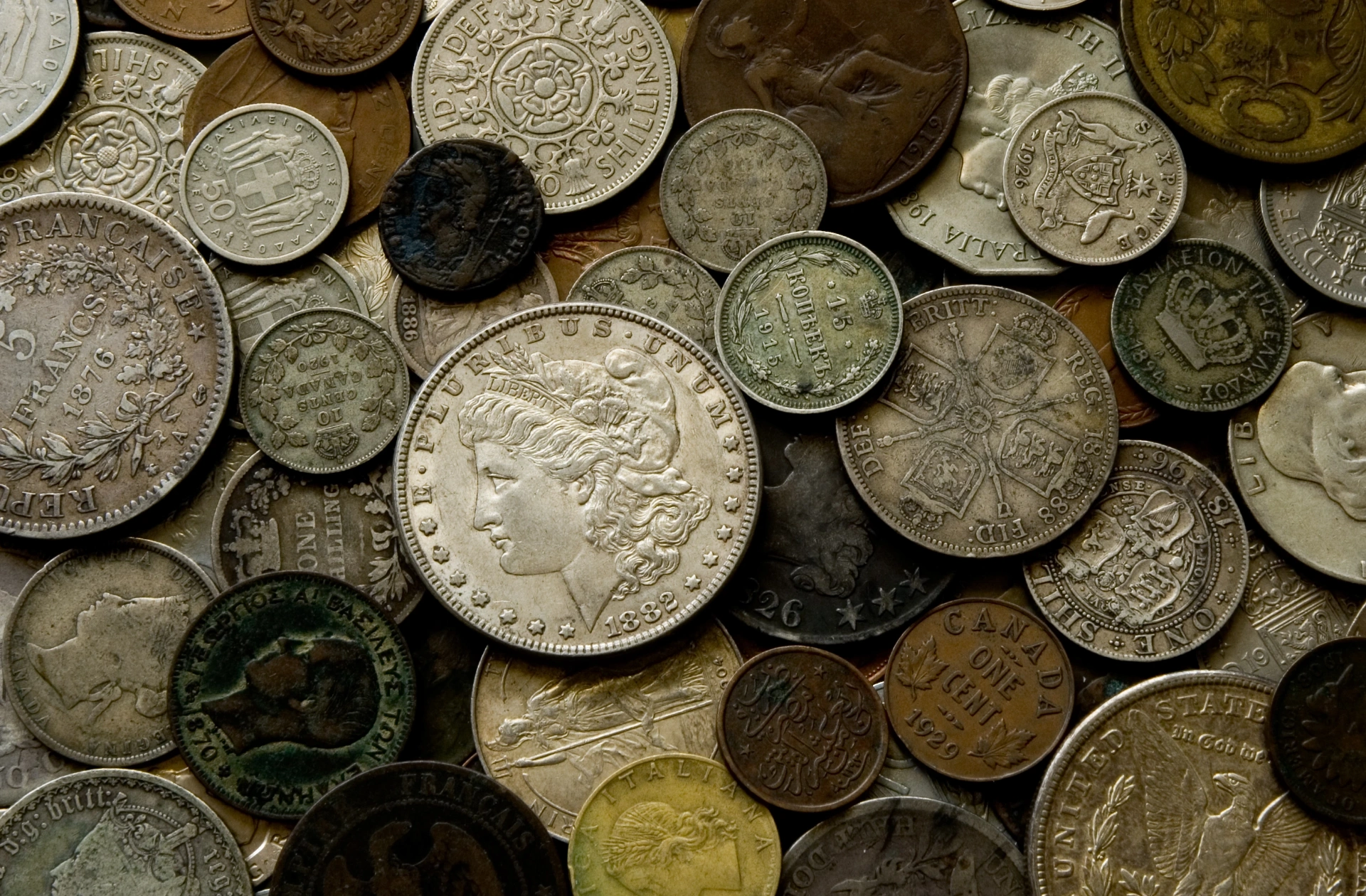
Hawaii is the only U.S. state that once minted its own coins as a sovereign nation. Between 1847 and 1883, the Kingdom of Hawaii produced a small but fascinating series of coins and tokens that collectors still chase today. Some are worth a few hundred dollars. Others sell for tens of thousands.
If you live on Oahu and have Hawaiian coins, old tokens, or inherited pieces you can't identify, this guide will help you figure out what you're holding and what it might be worth.
A Short History of Hawaiian Coinage
Before Western contact, Hawaiians traded through barter. No coins, no currency. That changed as foreign merchants, missionaries, and whalers arrived in the early 1800s. Spanish colonial coins, American dollars, and British currency all circulated on the islands at the same time, creating a messy monetary system.
The Hawaiian government stepped in twice to fix the problem.
1847: The Keneta (Hawaiian Cent)
King Kamehameha III ordered Hawaii's first official coin in 1847. Called the Keneta (a Hawaiian word for "cent"), this large copper piece was about the size of a U.S. large cent. The obverse shows a bust of the king surrounded by "KAMEHAMEHA III. KA MOI." The reverse reads "HAPA HANERI" (meaning "part of a hundred") within a wreath.
The coins arrived in Honolulu damaged and discolored from months at sea. Local merchants rejected them. The king's portrait was hard to recognize. The whole project fizzled, and Hawaii didn't try again for 36 years.
About 100,000 Keneta coins were minted. A well-preserved example can bring around $2,000 at auction today.
1883: The Kalākaua Silver Coinage
King Kalākaua authorized the second and final round of Hawaiian coinage in the early 1880s. After a world tour in 1881, he wanted coins bearing his likeness to assert Hawaiian sovereignty.
The government contracted with Claus Spreckels, a sugar magnate, to arrange production at the San Francisco Mint. Charles E. Barber, the Chief Engraver of the U.S. Mint, designed the coins. The San Francisco Mint struck $1,000,000 worth of silver coins dated 1883 in four denominations:
| Denomination | Mintage | Approx. Value (VF) | Approx. Value (MS) |
|---|---|---|---|
| Dime (Umi Keneta) | 250,000 | $75–$200 | $1,500+ |
| Quarter Dollar (Hapaha) | 500,000 | $50–$150 | $1,200+ |
| Half Dollar (Hapalua) | 700,000 | $100–$300 | $1,500+ |
| Dollar (Akahi Dala) | 500,000 | $250–$500 | $8,500+ |
The coins were not an instant hit. Honolulu's business community worried about inflation during a recession. But by 1885, the economy improved and the coins circulated freely across the islands.
After the U.S. annexed Hawaii in 1898, the government revoked the coins' legal tender status. Most were recalled and melted at the San Francisco Mint by 1903. The Chinatown fires of 1887 and 1900 destroyed additional pieces. That's why surviving examples are scarce and command strong premiums today.
Hawaiian Plantation Tokens: The Other Collectible
Beyond the official Kingdom coins, Hawaii produced another category of collectible currency: plantation tokens.
Sugar plantations dominated the Hawaiian economy throughout the 1800s. These estates operated like small towns with company housing, stores, and their own currency. Plantation owners paid workers in tokens redeemable only at the company store. The tokens were not legal tender, but they circulated across the islands.
Most plantation tokens were struck in brass, copper, or aluminum by local blacksmiths on Maui and other islands. They have a handmade quality that adds to their appeal. The most common denomination was 12½ cents, equal to one Spanish real (one-eighth of a Spanish dollar).
Popular plantation token series include:
- Wailuku Plantation (1871 and 1880): Known for their "starfish" designs with broad and narrow varieties. These are among the most recognizable Hawaiian tokens.
- Thomas H. Hobron (1879): Issued to pay workers building the railroad between Kahului port and the Wailuku sugar plantation on Maui.
- Haiku Plantation: Produced rial-denomination tokens that are now extremely scarce.
Plantation tokens range from around $850 for more common types to $27,500 or more for rare varieties. PCGS and NGC both authenticate and grade these pieces, which helps confirm legitimacy in a market where counterfeits exist.
What Makes Hawaiian Coins Valuable?
Several factors drive the value of Hawaiian Kingdom coins and tokens:
- Rarity. Most of the original $1,000,000 mintage was melted after annexation. The 1883 Akahi Dala (silver dollar) is especially hard to find in high grades.
- Condition. Grade matters. An 1883 half dollar in Fine condition might sell for $150. The same coin graded MS-65 could bring $3,000 or more.
- Historical significance. These coins represent the only coinage ever produced by a sovereign Hawaiian kingdom. That story resonates with collectors worldwide.
- The pattern 12½-cent piece. Only about 20 proof specimens were struck before the denomination was scrapped. These catalog around $35,000 and rarely appear at auction.
- Misspelled 5-cent piece (1881). A nickel prototype minted in Paris misspelled the Kingdom's motto. The king rejected it, and most were destroyed. Survivors catalog around $15,000 in mint condition.
How to Identify Your Hawaiian Coins
Not sure what you have? Here are the key identifiers:
- 1847 Keneta: Large copper coin, about the size of a U.S. large cent. Look for "KAMEHAMEHA III" on the front and "HAPA HANERI" on the back. Two varieties exist: Plain 4 ("Small Bust") and Crosslet 4 ("Large Bust") in the date.
- 1883 Kalākaua Silver Coins: All four denominations show King Kalākaua's profile on the front. The larger coins (quarter, half, dollar) display the Hawaiian coat of arms on the reverse with crossed kahili (royal feathered staffs). The dollar also features the Star of the Order of Kamehameha.
- Plantation Tokens: Look for denominations in cents or reals, often stamped on crude brass or copper blanks. Many feature starfish, plantation names, or initials.
- Modern restrikes and souvenirs: The Royal Hawaiian Mint and other producers have made commemorative pieces since the 1970s. These are collectible but not the same as original Kingdom issues. Check eBay or auction records to compare.
Bonus: WWII "HAWAII" Overprint Currency
After the attack on Pearl Harbor in 1941, the U.S. government recalled American dollars circulating in Hawaii and overprinted them with "HAWAII" in large letters. If Japan invaded and captured the currency, it could be declared worthless.
These overprint notes are a separate collecting category from Kingdom coins, but many Hawaiian families have them tucked away in drawers and safe deposit boxes. They carry a modest premium over face value depending on denomination and condition.
Where to Sell Hawaiian Coins in Honolulu
If you have Hawaiian Kingdom coins, plantation tokens, or WWII overprint notes, your best move is to get a professional appraisal before selling. Online marketplaces and mainland dealers may undervalue pieces with local historical significance.
Honolulu Coin Buyers offers free, no-pressure appraisals for Hawaiian coins, tokens, and currency. We buy individual pieces and entire collections. Whether you inherited a box of old coins from a family member or found a single 1883 silver dollar in a dresser drawer, we'll tell you exactly what it's worth.
Why sell to a local Honolulu coin buyer?
You get a face-to-face evaluation from someone who understands Hawaiian numismatics. No shipping risk. No auction fees. No waiting weeks for payment. Just a fair cash offer on the spot.
Ready to Find Out What Your Hawaiian Coins Are Worth?
Call Honolulu Coin Buyers at 808-215-4048 or stop by our shop for a free appraisal. We buy Hawaiian Kingdom coins, plantation tokens, gold, silver, and rare numismatic pieces. No appointment needed.